
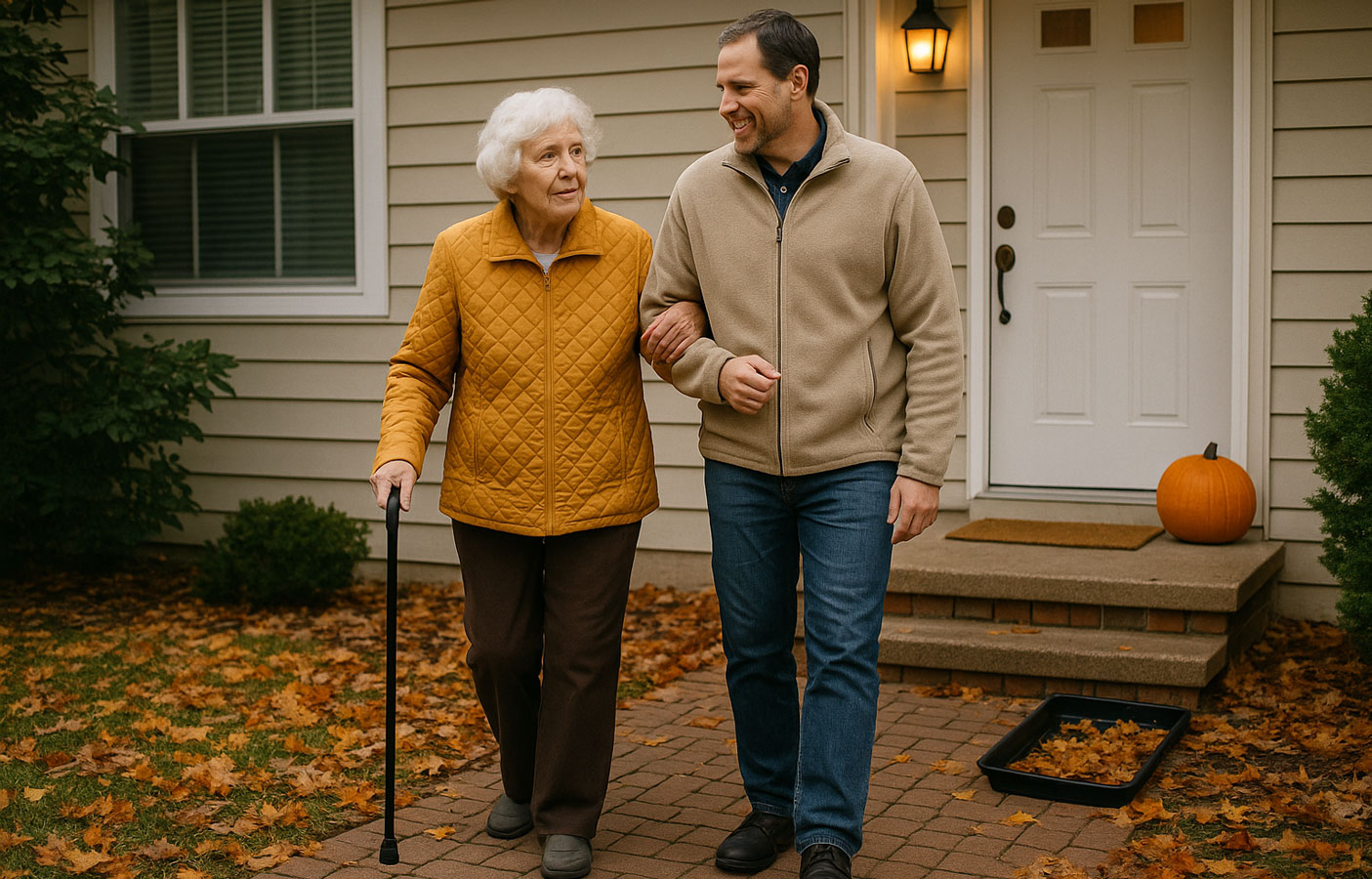
Shorter days, wet leaves, and shifting routines can make autumn tricky for older adults—especially those living with dementia or Alzheimer’s. These tips focus on simple, doable changes families can make at home to keep loved ones comfortable and safe through the season.
1) Brighten the Home (and the Evening Hours)
- Combat early dusk: Turn on lights 60–90 minutes before sunset to ease the transition from daylight to evening.
- Layer lighting: Use soft, indirect lamps plus nightlights in bedrooms, hallways, and bathrooms.
- Cut glare & shadows: Close blinds at dusk; choose warm bulbs (2700–3000K) and matte lampshades.
- Label switches: Large-print labels or stick-on icons help a loved one find the right switch quickly.
2) Prevent Slips, Trips, and Falls
- Tidy pathways: Keep floors clear of cords, pet bowls, and clutter; secure or remove small throw rugs.
- Non-slip zones: Add grippy mats at entries where shoes track in leaves and moisture.
- Stairs & thresholds: Check handrails for wobble; add high-contrast tape on steps and raised thresholds.
- Footwear check: Encourage closed-heel shoes with non-skid soles; avoid floppy slippers and long hems.
3) Make Entrances Weather-Wise
- Leaf & moisture control: Place sturdy boot trays and absorbent mats inside and out.
- Good drainage: Clear gutters and downspouts so water doesn’t pool and freeze on walks.
- Motion lights: Install at front/back doors and garage entrances for safe, well-lit arrivals.
4) Plan for “Sundowning”
-
Some people with dementia become more confused, anxious, or restless late afternoon into evening.
- Keep a routine: Aim for consistent meal times, calming music, and low-stimulation activities before dusk.
- Limit late naps & caffeine: Favor a brief rest after lunch instead.
- Offer comfort cues: A favorite sweater or soft blanket, warm herbal tea, or hand massage can soothe.
- Have a “quiet basket”: Puzzles, fidget items, photo books, or soft towels for folding.
5) Support Orientation & Wayfinding
- Simple signage: Large-print door labels (“Bathroom,” “Bedroom”) reduce confusion.
- Contrast matters: Use high-contrast placemats and toilet seats to make essentials stand out.
- Clock & calendar: Place easy-to-read versions in common areas to anchor time and date.
6) Prepare for Colder Weather
- Heat & air checks: Service the furnace; replace filters. Keep space heaters out of walkways and never leave them unattended.
- Carbon monoxide & smoke alarms: Test monthly; replace batteries at the time change.
- Layered clothing: Light layers are easier to adjust than bulky sweaters; watch for overheating indoors.
7) Medication, Hydration, and Nutrition
- Medication timing: Early nightfall can disrupt routines—use a pill organizer and reminders.
- Hydration: Dry indoor air + cooler temps = reduced thirst. Offer water-rich foods (soups, fruit) and warm drinks.
8) Safer Outings & Walks
- Choose the “golden hours”: Late morning to early afternoon—good light, milder temps.
- Visibility: Reflective clothing, simple ID jewelry, and a card with contact info.
- Surface scan: Stick to dry, well-maintained paths; avoid piles of leaves that can hide holes or slick spots.
9) Reduce Wandering Risk
- Door cues: Place a black doormat or decorative stripe inside exits (can deter stepping over).
- Chimes/alerts: Simple door chimes or motion sensors provide quick awareness.
- Consistent reassurance: Respond calmly and redirect with purposeful tasks (“Let’s check the apple crisp,” “Help me fold these towels.”)
10) Holiday Décor Without the Hazards
- Keep it familiar: Too many new decorations can be overstimulating or confusing.
- Avoid look-alikes: Fake food or realistic candles can prompt unsafe behaviors. Use battery candles only.
- Halloween plan: If trick-or-treat traffic causes stress, post a friendly sign, use a candy bowl outside, or enjoy a quiet activity in a back room during peak hours.
11) Caregiver Well-Being (Because You Matter, Too)
- Build a backup list: Neighbors, friends, or local respite options you can call for a short break.
- Prepare a “go bag”: Copy of meds list, advance directives, warm layers, snacks, and a favorite calming item for your loved one.
- Keep expectations kind: Shorter days can be hard—simplify meals and plans, and celebrate small wins.
Quick Fall Safety Checklist
☐ Lamps and nightlights set to turn on before sunset
☐ Non-slip mats at entries; throw rugs secured or removed
☐ Handrails sturdy; high-contrast tape on steps
☐ Door chime or motion alert installed
☐ Furnace serviced; CO/smoke alarms tested
☐ Pill organizer filled; reminder system set
☐ “Sundowning” calming routine ready
☐ Reflective gear/ID for walks; preferred daytime outing window chosen
☐ Simple, familiar autumn décor; battery candles only
Every person’s needs are unique. If something here isn’t a fit, skip it. If a strategy helps—even a little—keep it. When in doubt, talk with your loved one’s clinician or dementia care specialist for individualized guidance.